Hyperfixation: Keyboards
So around October, I stumbled onto a random video on Youtube, talking about computer keyboards, specifically modifying or “moding” them, changing the switches, adding sound absorbing material into the cases to change the sound. Turns out, you can change the sound of keyboards! Who knew?! Not I!
I have loved pressing and clicking buttons since I was a kid. I now know its because it meets a sensory need for me, it also explains why despite my love of typing, I would get so tired half way through typing up a blog post. The sound quite literally wore me out, or rather coping with it did.
Sensory Perception
I was recently diagnosed with Autism and ADHD ( I’m going to put together another blog post on that separately), and while that answered a lot of questions for me about the way my brain works, it also confirmed for me that I have a hyper-sensory profile, meaning I’m more sensitive to sound, touch, taste etc.
“Noise” is one of the few things that I can’t control. I can or course choose what I eat and what I wear, but I can’t control what noises I’m exposed to. Again, I’ll go into more detail in another post, but for keyboards specifically, I always got tired after typing for a while, which I assumed was due to my EDS, but seems like it was audio overwhelm. I was quite literally wearing myself out coping with noise I hated, but like most late diagnosed neurodivergent people, I assumed it was just me being weird and tried to get on with it.
Enter the Switches!
So here comes more information about keyboard switches than you (probably) ever wanted to know. We are talking here about mechanical keyboards which are “hot swappable” or where you can remove and replace switches, not to be confused with standard membrane style keyboards, that are fixed in place.
Switches are generally divided into two categories; Linear and Tactile.
Linear switches are smooth to press, with no obvious bump or “bottom out”. You can buy different weights of switches (measured in grams) meaning how hard you have to push changes, but you still don’t feel a ‘bump’ or ‘click’, other than the sound (however limited) of the key hitting the keyboard. Heavier switches require more pressure, and might get tiring if you type all day, whereas they can be more popular with gamers, as they tend to be bouncy and quick returning which is essential for PC gaming. You also have to press heavier keys down further to ‘activate’ the keystroke, so that works out well if your mashing the keyboard to avoid zombies, but probably not great if you’re typing a novel.
Linear switches are usually described as sounding “creamy” or “Buttery” and don’t generally have that “clacky” keyboard sound.
Tactile switches on the other hand have a noticable ‘bump’ at the actuation point (when the keystroke registers), this means you’ll feel when the keycap is pressed without having to ram it into the keyboard to be sure. Popular with anyone that does a lot of typing, as you can glide across the keys much quicker, improving your tying speed, but also expending less energy. As with Linear switches, you can buy different weights, which alter how much pressure you need to add to get to the actuation point.
Tactile switches are usually described as sounding “Thocky” or “Clacky”. Thocky switches are my personal favourite.
Both Tactile and Linear switches are available in different actuation points, meaning you can choose a switch with a short actuation point if you want to type really fast, or a long one if you mash hot keys in gaming. You can also get them in different weight combinations, so you could have a short heavy switch, or a light long switch, whatever suits your preference.
There is also a third type of switch called a Clicky switch. As the name suggests, this type of switch is tactile, but aims to increase the sound of the tactile bump with an especially audible ‘click’. These kind of switches are popular for Fidget Clickers, and with a smaller population of keyboard enthusiasts. They are jokingly (but not really) called “Divorce Switches” for a reason!
Is there such a thing as a Silent Switch?
Yes! You can get silent switches in both linear and tactile (to varying degrees). While no key can be completely silent, they are a popular choice for people that hate the sound of keystrokes, or want to use their keyboards in quiet offices or late at night (see Divorce Switches). I love tactile silent switches for fidget clickers that I take out and about, so I feel the ‘click’ without annoying anyone!
The keyboard maketh the switch
It should be said, that the type of switch you buy isn’t the whole story, as different keyboards sound different with the same switches, depending on what they are made of (plastic, aluminium etc) and more importantly, what they are filled with.
“Moding” keyboards involves adding foam, silicone, even plasticine to the inside of the keyboard (behind the circuit board) to muffle or absorb the sound. the type of material you use will dictate what kind of sound you achieve. For example silicone is popular for thocky keyboards, and foam is better for clickier sounds.
While moding is still really popular, stock keyboards have come a long way in recent years, and most already have silicone or foam filling, so all you have to do is decide on the switch type.
So what keyboards do I have?
Let’s be clear, keyboards can be expensive hobby. Boards and switches vary in price, but generally better materials are more expensive, so that’s why I got started at Christmas (thank you Santa!). My keyboards with their custom switches are:
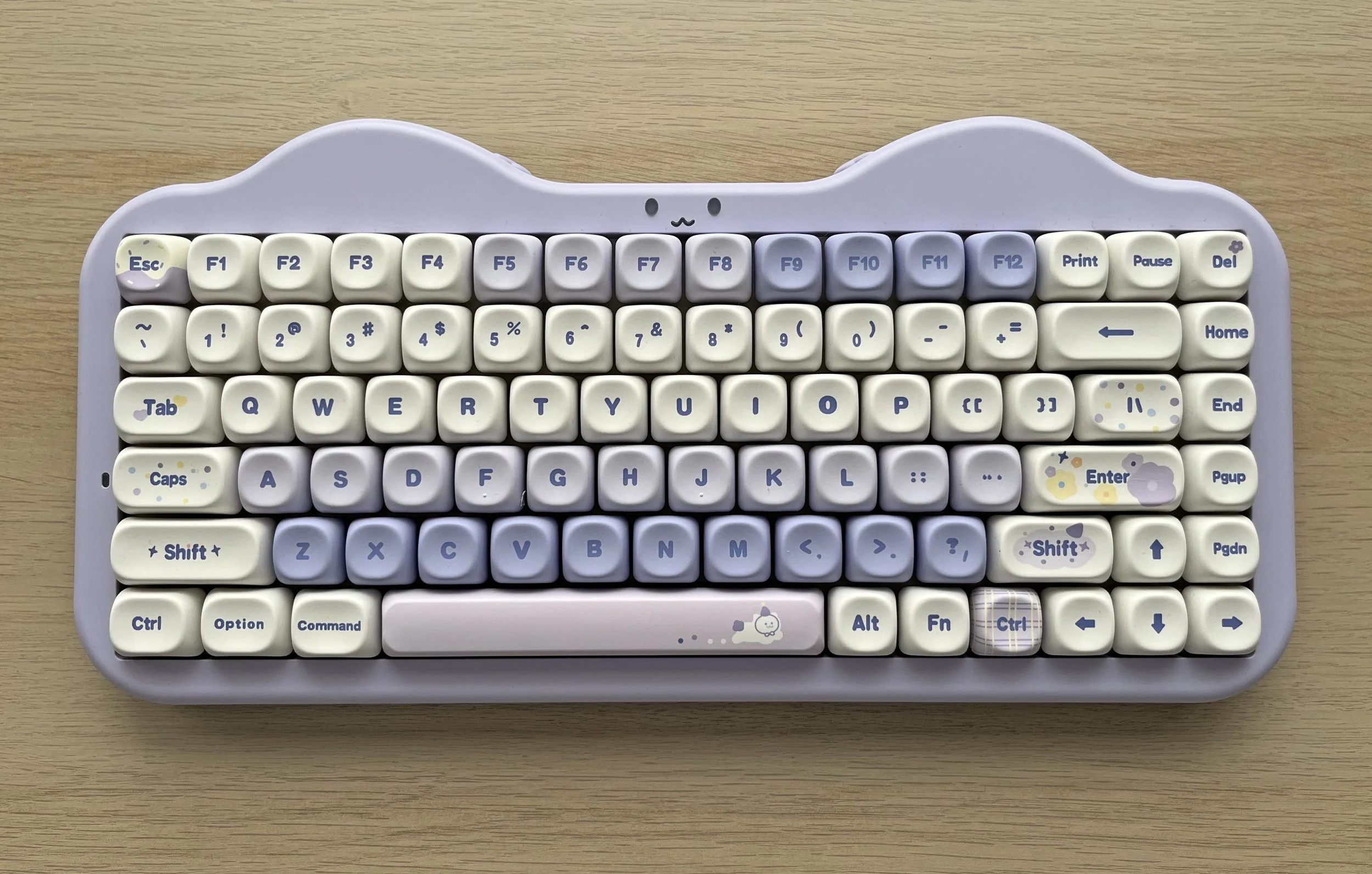
Yunzii C75 Purple, with Yunzii Candy Switches
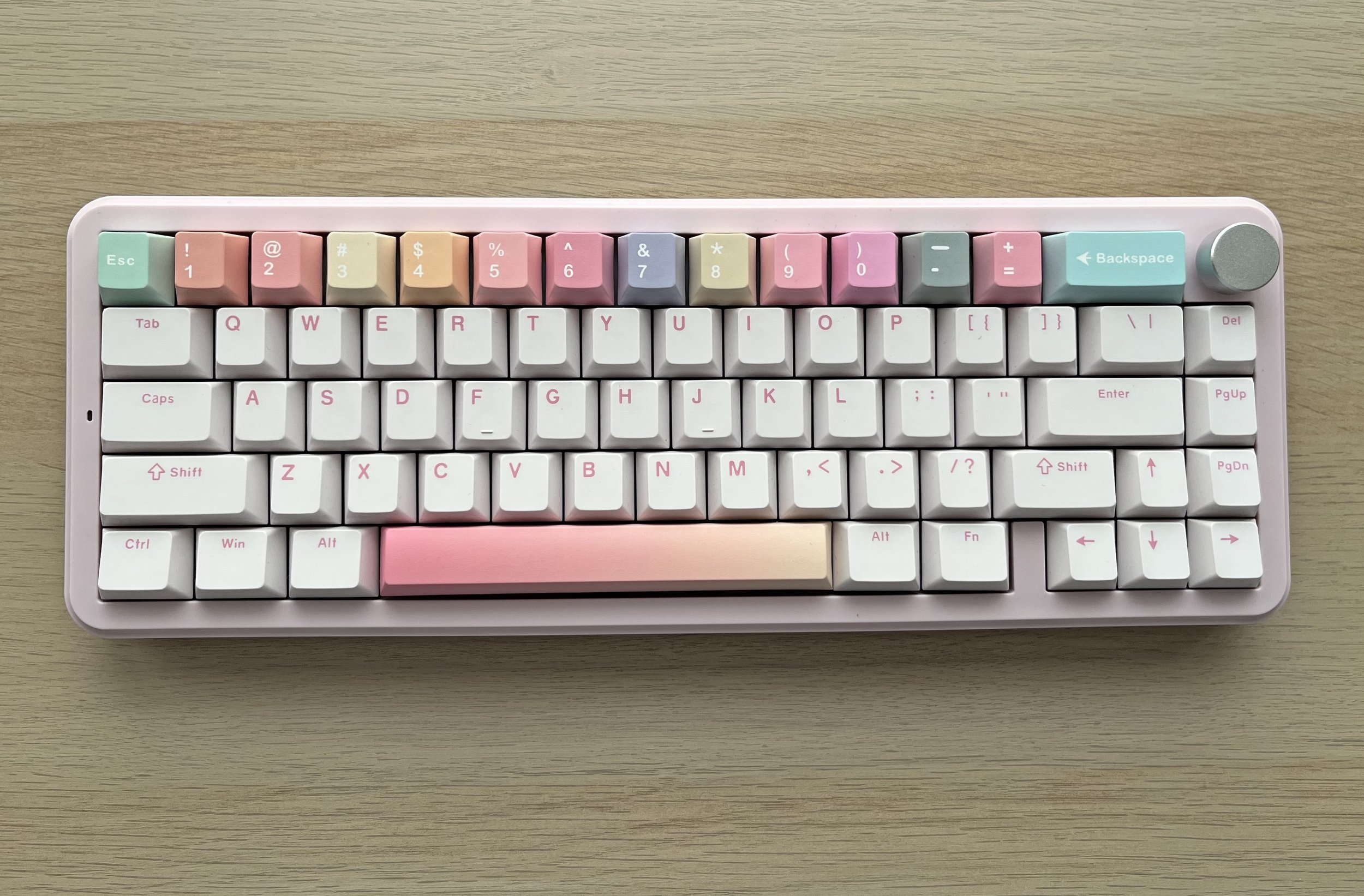
Yunzii B68 (Rainbow key) with Yunzii Cocoa Cream Switches
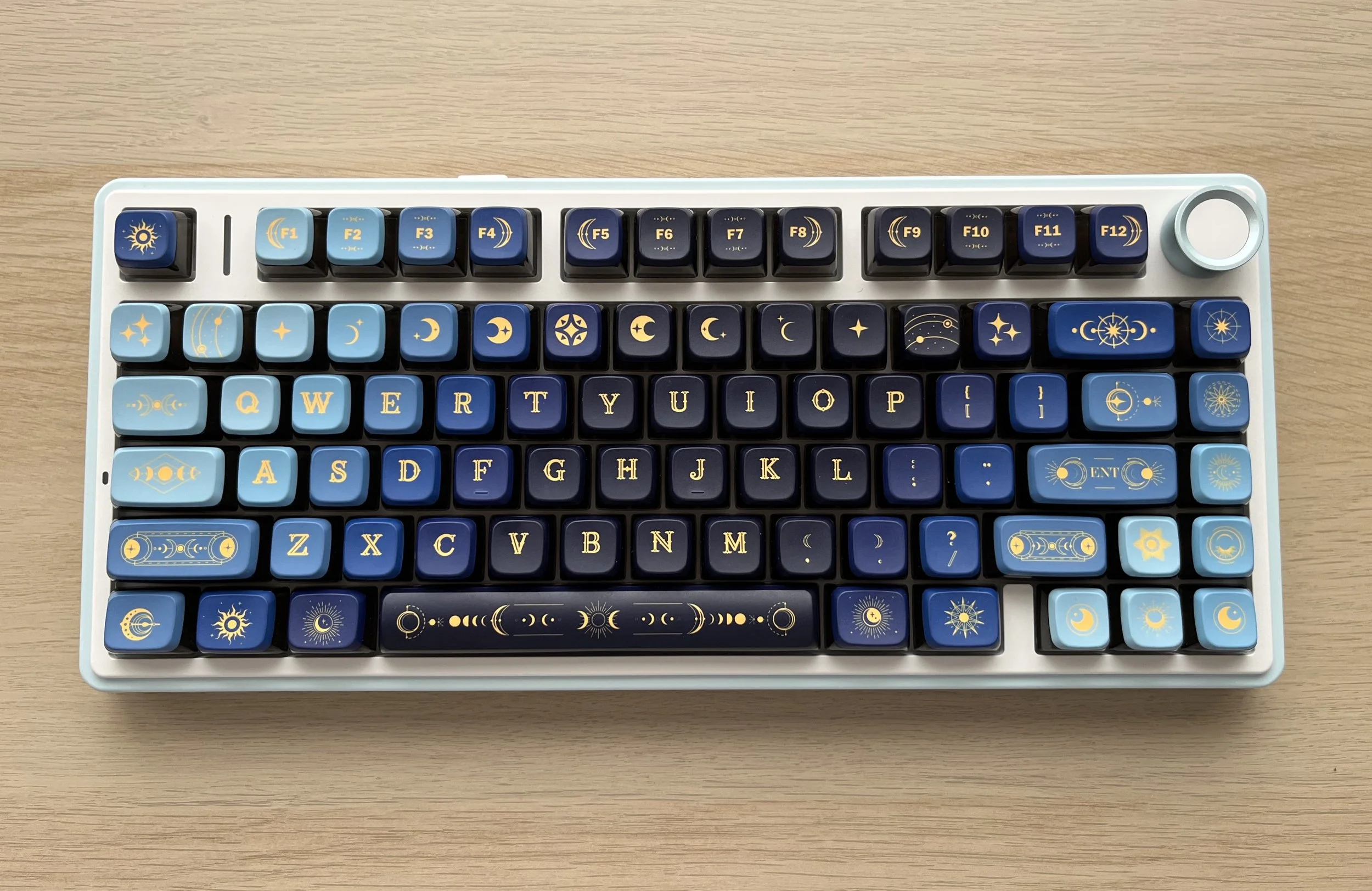
Aula F75 (after Market Celestial Keycaps) with Yunzii Candy Switches
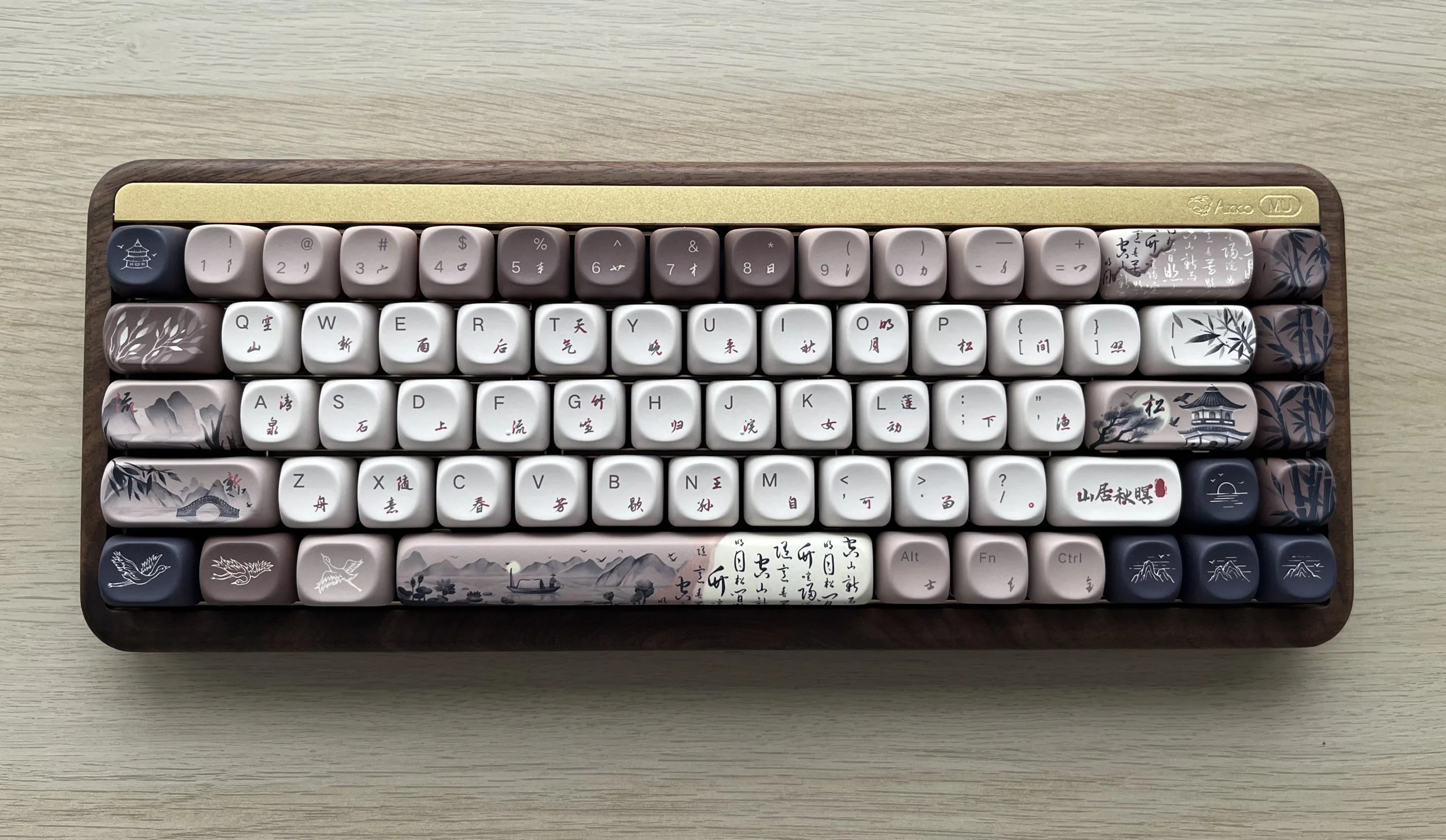
Akko MU01 Wooden Keyboard with Keygeek Y2 switches
Monsgeek MG 108 (after market ‘Toy’ keycaps) with Akko Piano switches.
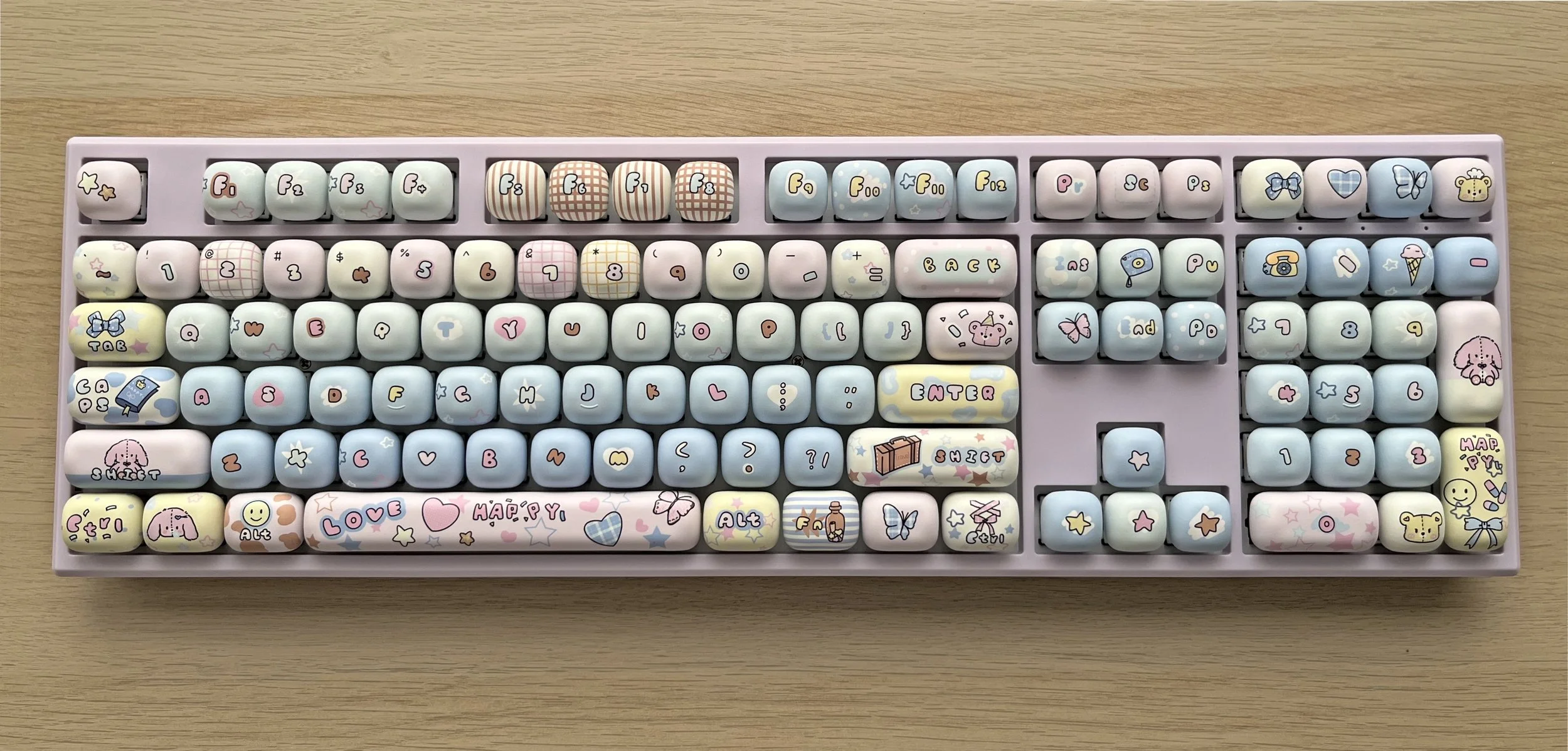
Yes, I have 5 keyboards. Yes that’s a lot. I managed to get them all during Black Friday (otherwise I would have maybe 2 haha!).
Surely you don’t need 5 keyboards?! No one ‘needs’ more than one keyboard, but I have found having many keyboards with different sounds allows me to change up the keyboards if I get bored, which means I can hang in there if I’m typing for a long period of time, thus feeding my need for novelty (ADHD) and soothing my distaste for unwanted sounds (Autism). I have, at the time of this post, typed 4 chapters of my first ever novel, which is 3 and 3/4 more than i’ve ever gotten before, so the system is working!
The takeaway
I’m just excited about my keyboards, and I’ve decided that creating a blog post about any current interests is a great way for me to share my interests without boring innocent parties! However, I hope that I may also share something you may not have known before, maybe even help you get started on a new interest yourself!
Are you a keyboard fan? Tell me about your set up below!
Kerrie x